Sunday, 18 September 2016

Damn the Large Dams

One of my first blogs was on this subject only. Now in the wake of Kaveri issue again raised, am tempted to write another on the same subject with different details.
The point remains the same that we need to seriously assess the serious impact of large dams over the society & country as a whole Vs the benefit it brings. And assess alternatives also. Several water experts over recent decades have damned the large dams. Large dams across India (world) experienced a lot of ill effects to the society, decreasing soil quality, decreasing agriculture yield, decreasing fisheries, bringing riparian states on almost war. Is it really a boon or a bane?

The concept of building these large dams itself is modern & is from British colonial era. It was never there in the ancient past nor in medieval period. And it is wrong to say, it is a modern science & technology evolution & a great gift to mankind. Indians & Chinese have built formidable walls, forts like, Kumbalgod fort, Chitradurga fort & magnificent temples.  Could they have not build a simple 120ft height by 150ft length dam? They have indeed. But not rampantly like modernists. The Great Cholas have built several miles long tank bund which is standing formidable even after a millennium (not decades, not centuries but millenium). It has come to rescue the water guzzling metro, Chennai today. Refer the Ref2 &3 links in end below. But the difference is they built scientifically a tank bund but not a DAM unscientifically across a large river.

So the point is – All that is British OR all that is modern is not really scientific. All that is ancient is not just aesthetics and art. It has science & long, very long, very very long vision for the society, its prosperity & harmony.   

Now the world is seriously debating it. If you google for “decommissioning large dams” there are several scholarly books & articles you get, but most importantly ‘developed’ nations like US & European countries are marking several dams for decommissioning due its hazards outweighing its utilities.
Pity is that in India, government in 2004 commissioned some 100+ major dams in pristine, virgin Northeast region rivers. We are more British than the Brits themselves now. Should we not rather follow our own ancient scientific approach?  

Kaveri River Case Study

Here we’ll take Kaveri as a typical river system for study. It is very typical & our understanding here can be applied across any river system anywhere in the world. The purpose is to understand whether large dams benefit society in long run OR they are futile & unsustainable.

Across Kaveri we have 2 major dams – KRS in Karnataka and Mettur dam in TN. Some details on history, river dispute, tribunal reward, issues, and solutions are given in the Reference links in the end. Almost all of them deduce that the tribunal award is equitable in good monsoon condition. But in a bad monsoon year like 2012, 2016 it is not proven good for Karnataka. So the ‘distress formula’ is not good. The solution is – all Karnataka MP s should put up a united front, call for friendly resolution with TN MP s with central arbitrator. Propose solution to Tribunal and get ‘distress formula’ reformulated. That’s it. But the first step – ‘Karnataka MPs’ putting up a united front is where we fail. If we pass that, then all else will pass.

Now it will be foolish to talk about decommissioning the dams. But is it fully utilized? What it takes to utilize fully. Let’s focus on those answers. For that let’s understand some of the basics. Then it will be easy to understand if it can be utilized fully. If so, what it takes.

Natural River Course: Kaveri runs for about 700+Kms. A river starts from mountains. It gathers waters from several streams along. After long, it hits plains & it widens. Along the route several ‘tributaries’ join it to make it a big river. As it nears the end of its journey, at the mouth of its joining the sea, it divides into ‘distributaries’. These tributaries and distributaries make up the natural river system. The fig1 shows the same.

Tributaries are the wealth of the agriculturists. Distributaries are life line for fisheries.

The socially best and scientific way to sustain good economic life is to build small check dams or tanks along all tributaries. The main river will have primary tributary for which secondary will be there for which tertiary will be there and so on. Our ancient kings used to aid villages build & maintain their own tanks, bunds, Kalyani, Pushkarani, etc., and there used to be beautiful connected tank system too. This would ensure excess water flows to the next lake and then next and so on until it reaches a tributary. This controls flooding also. Since all along 700+Kms of Kaveri running, there are tributaries, it is prudent to implement it in a harmonious way.

Advantages of this system are:
  • The tanks would ensure ground water level increase in entire surrounding area, giving equitable ground water to all agriculturists. However no bore well should be allowed. Else it would make unequitable share in favour of the rich
  • Social harmony: Small tanks maintenance is in hands of villagers. So they would maintain only their water and not fight for others.
  • Decentralized water governance at local level. No fight with central/ state government/ Supreme Court etc., what you get from God through good rain is what you manage with.

Limitations of this system are:
  • It cannot provide water for large cities like Bangalore, Mysore. They have to manage their own lake systems.
  • Large amount of water flows in the Main river to the sea. Modernists term it as waste of water going to join sea. But traditionists argue it enriches the estuary & fishing; and economic water transportation can be encouraged all along 700+kms;

But if villages are made self-sufficient and prosperous, then cities will not become behemoth centralized population crumbling by its own unmanageable weight.

Large Dams System: Here the large flow of water in the main river is envied. A large dam is constructed across. The purpose is to hold and distribute water to arid areas. So large dam system means – Hold large water and create artificial complex distributary system. Scientific way implemented in ancient times is to do small check dams across small tributaries & leave governance to locals. So comparison is quite stark. Few points for comparison given below:

Large Dam System
Connected   Tank System
Large onetime cost; Decades of Time to construct;
Small time; Small cost; Multiple places
Artificial distributary system; Large land acquisition & displacement, rehabilitation
Natural tributary system; No land acquisition; No displacement, no rehabilitation
Desilting is army like operation once in a decade or mostly never
Desilting is every year service by few, creating job for locals & incentive is the silt as fertilizer
Distributary canal maintenance is by State Government
Maintained by locals; By the people, for the people
Area coverage is for max 40-50kms length; And area in that length; About 2000sq Kms;
Area coverage is all along 700+ kms; Lakhs of sq.kms;
Worker is employee for salary
Worker is the beneficiary of canal system
Farmer breaches canal, bribes official. Diversions are done illegally. Locals don’t govern anything. So illegal guy doesn’t fear wrath of locals. Government cannot punish him for his illegal structures, bunds, diversions. So illegal thing is incentivized and not punished leading to social disharmony
Locals govern canals & tanks. Locals admonish illegal guy locally. So farmer is incentivized to be righteous and admonished for being wrong.
Distress time, Rain deficit time: Blame government, supreme court, burn buses; Anger spills violence
Distress time: Stay put & pray for better rains; Equitable impact to all farmers; Consume less;
Encourage large cities; Concentrating large populace in one place & provide piped drinking water; Pumping stations increase carbon footprint. Consumers don’t realize cost of complexity
Encourages decentralization of water management. Encourages villages, towns & cities to feed themselves by their own indigenous systems. Consumers will be aware of water value.


Distribution system is key to success. For KRS there are 3 main canals. Apart from these 3, one overhead canal built is dysfunctional from the day 1 of the water release. One can see the overhead canal on way to Mysore after crossing Srirangapatna.
The 3 canals run for about 40kms. That’s it. But it divides into distributaries at secondary, tertiary levels. Along the way it irrigates the farm land. So total length of these distributaries is about 300+kms.

So for example, KRS dam canals irrigate Mandya district and KR Nagara in Mysore and a bit of southern Hassan. It doesn’t reach Ramanagara, Kanakapura, Bangalore rural, Tumkur etc., The biggest advantage of KRS is it gives drinking water to guzzling cities of Bangalore, Mysore, Mandya.

Few more disadvantages & complexities of this system are:
  • Distributary has to reach last mile from central reservoir. So a complex distributary system has to be built & maintained. Crores of Rs go down the drain. For example, Bennehole canal system (Bijapur) no longer exists today, but there is a department with officials drawing salary for maintaining it. There are several such examples.
  • Distribution system at secondary & tertiary levels is always in serious problem in almost all canals around the world. You take any status report of any irrigation department any day, this is the case. Water doesn’t reach the last man properly due to various reasons.


Solution?
  • Don’t build any more new large dams. It is even suggested by UN since 90’s after disastrous results over several decades in several countries.
  • Those built have to give local governance over the distributary canal system. Only dam maintenance should be with the central/state government.


So if you weigh options, you find the large dams are disastrous in the long run. It serves very little for humanity. That is the main reason the Kings in the ancient & medieval times didn’t build these monstrous unscientific crass. Besides the most critical responsibility of the Kings was welfare of the people, their law abiding nature, and their self-governance. So it was detrimental to these social aspects. Hence they didn’t invest on this “Mad Science”.

It will be good if our today’s politicians learn a bit from our ancient kings and their governance. Most importantly they take back any new large dam construction projects. More than environment disaster it is the social harmony which gets affected.

Reference:
Ref3: Grand Anicut – The world’s oldest functioning dam - https://en.wikipedia.org/wiki/Kallanai_Dam
Ref5: KRS & its canals details from karanataka govt site: http://waterresources.kar.nic.in/salient_features_krs.htm
Ref6: Very detailed analysis on whole Kaveri Issue, Tribunal award its history etc., https://kiranasis.blogspot.in/2012/10/kaveri-river-water-sharing-what-are.html?showComment=1474124186149#c6163037838018736733


Kaveri River Basin.PNG


Tribunal award


Bangalore Connected Lake system (Which is now dysfunctional)

Rough interventions to control water flows on proportional system


 Field inlet from a lined tertiary canal


A partitioning structure along a secondary canal exhibiting few problems. Left and
front offtake have been gated after NWMP but gates are blocked open (spindle is twisted) -
Right offtake is not gated – Left offtake is temporary closed with vegetation

Sunday, 31 July 2016

Exploring Few Hoysala Temples on way to Shivamogga

Hoysalas are the greatest makers & builders of Karnataka. Their period is approx from 1000CE to 1300CE. Any nook & corner you go in Karnataka you will be greeted with intricately sculpted temples. Each one is unique, beautiful, scientific, amazing geometrical symmetry, architectural marvel. The intricacy in soap stone carving is extraordinary. It is world famous and unique. One will wonder if they could carve such intricate designs in stone, what would be their achievement in gold jewelry works? Hoysala temples are well spread from North Karnataka to South. Of course Belur, Halebid in Hassan attract lot of foreign and local tourists. But there is much to explore across Karnataka. Just in the outskirts of Bangalore Bhoga Nandishwara temple on way to Nandi Hills is an example of their fine art. Chola dorai Rajendra Chola installed the Linga and built first temple, later expanded by Chalukyas and Hoysalas. It is a must visit for Bangaloreans. 

The way to Shivamogga from Bangalore is pothole ridden. But the way is beautiful and green all the way in Mansoon. And off track you get dozens of Hoysala temples. We mapped our trip plan to cover only 3 famous ones on the way – (1) Kaidala just outskirts of Tumkuru, (2) Shiva temple in centre part of Arasikere, (3) Amrutheshwara temple in Amruthapura just before Tarikere.  

After attending the marriage function in Shivamogga for which we went primarily we also visited Koodali village. It is where the Tunga and Bhadra sangama happens. It is a beautiful place. 

In Koodali village at the Sangama, bathing ghat is constructed in ancient times and well maintained by both Madhwa & Smartha Brahmins who have mutts there. But hordes of Muslim youth were fishing there when we went at mid noon for a holy dip. We had slight altercation as they were scaring us away. We felt very bad. Why can they not build their own fishing ghats and leave the Brahmins place tidy? In the name of equality, dirtying holy places? When we enquired at the mutt, they said they have complained it to the authorities. We suggested them to put a board at least not to do fishing in our sacred bathing ghats. Hope someone listens.

On the way back from Shivamogga we came via Honnali, Harihara & Davanagere. On way to Honnali we visited Komaranahalli Ranganatha devalaya. This is a punya kshetra where one of the great Haridasa Mahile ‘Helavana Katte Giriyamma’ lived & submitted many Dasapadagalu to Ranganatha which we even today sing during our Pooja. It goes to show, there was no women discrimination during any medieval or ancient times as guilty Indian intellects depict. We have many Haridasa Mahila in our rich history.

Honnali Rayara Mutt is another Punya Kshetra. Honnali is very dear to me as I had done my primary schooling there. I visited my school. Harihareshwara temple in Harihara is another magnificient Hoysala temple we visited while returning.

Idol Disfiguring: Who did?


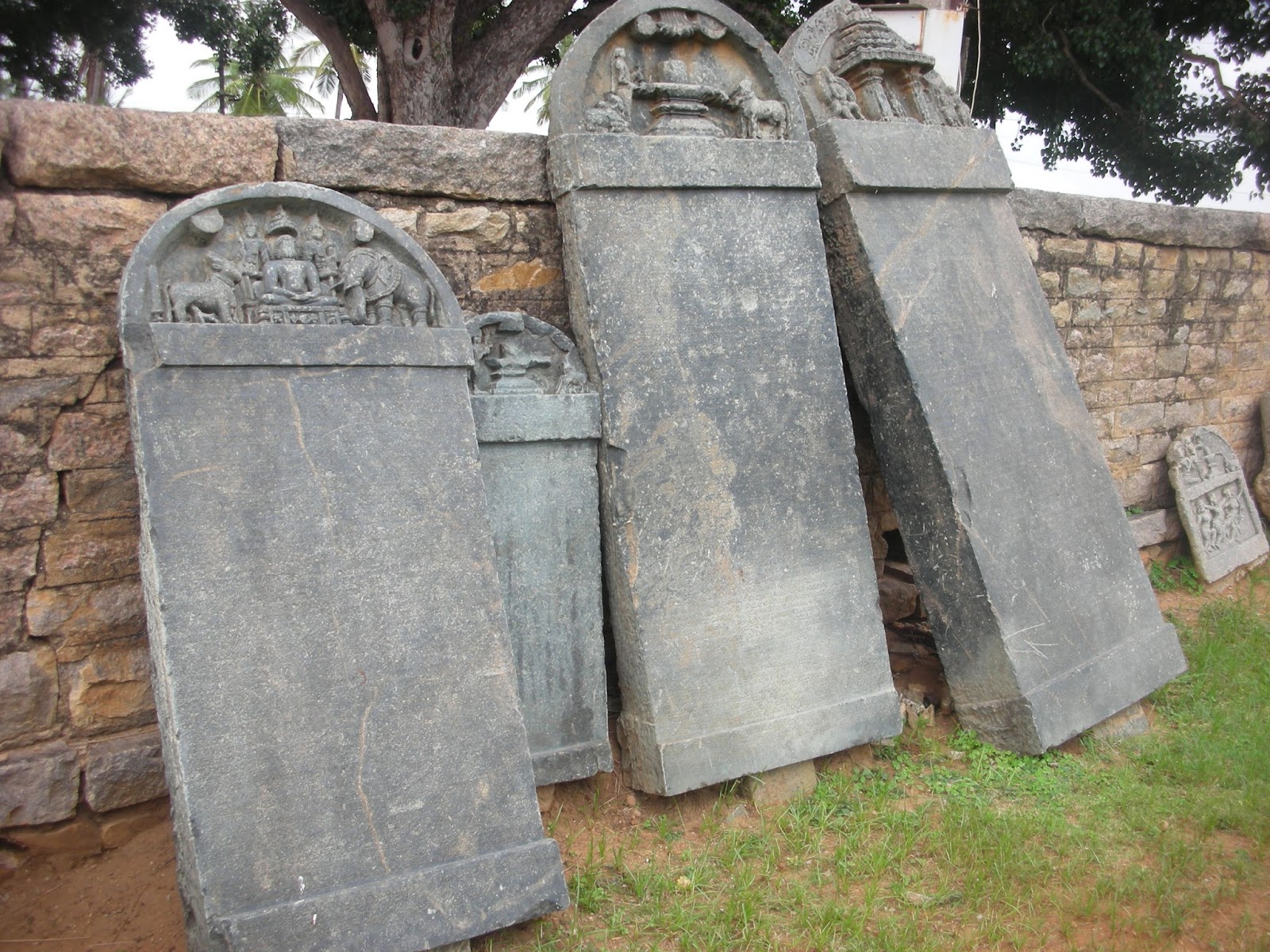
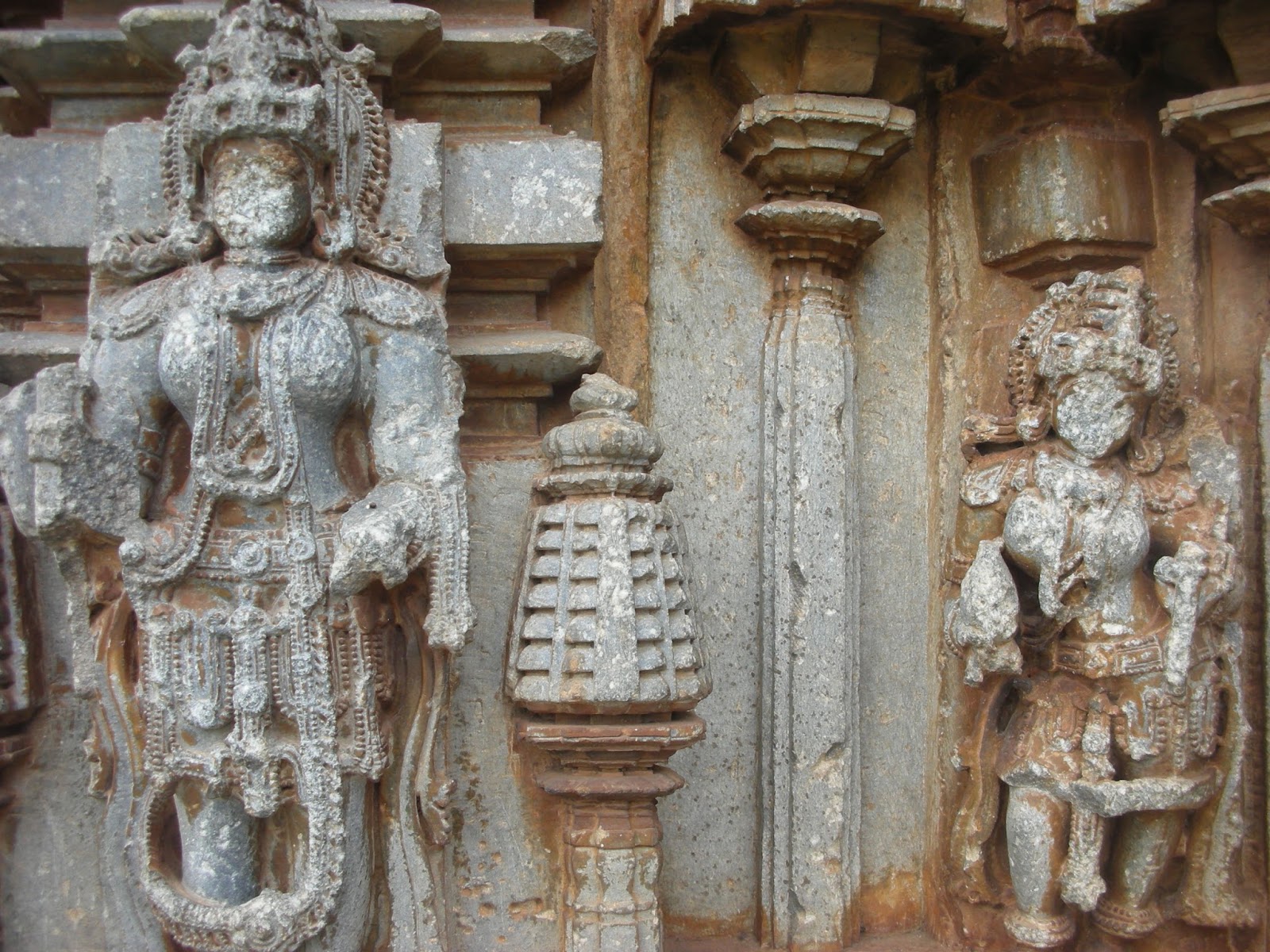
We observed all the idols in the outer walls were disfigured in Arasikere Shiva temple and Amrutheshwara temple. Especially their faces where chipped. So we enquired with the guides in both places. The answer baffled us. He said, some internal fights sir. Shiva followers hit Vishnu figures, Vishnu followers hit Shiva figurines!! But the same temple shows extraordinary harmony, by having Shiva Purana and Vishnu Purana sculpted. Besides, there are inscription stones lying there in temple complex showing Mahaveera, Shiva Linga also.
Answer in Amrutheshwara was that some cowherds without valuing idols had hit figurines. He himself was saying they have hit only faces, not Gopuras, Crowns etc.,
Why would cowherds chip Krishna’s face who is a Gopala himself?
When we prodded further, then he said, may be when Mohammadans invaded Halebid which was capital of Hoysalas, they had sent some army contingents to these temples to do their bit of service to Islam.

Islam is against idolatry. In all its holy scriptures it declares destruction as a holy job. All the Islamic kings took pride in becoming a ‘Ghazi’ a title given to one who destroys maximum idols & idol worshippers.

They themselves are proud of this act of barbarism and boast it. Even today they are destroying ancient UN protected temples in Syria and Iraq. Then why our guards & guides lie? Are they told to lie? If so why? Is it to appease Muslims? Or is it not to instigate anger & hatred amongst Hindus against Muslims?  In this overdo to please Muslims are we not hurting ourselves?

I asked who his Kuladeva is, for which he said, Shiva. I asked him if he would destruct Vishnu’s idol then. He retorted with shock – NO! Then who would do that? Which Hindu preacher or king or mutt would do that? In Hindus we have the culture of respecting others Gods. We call our God supreme but don’t destruct or hate others Gods. But still who amongst Hindus in Government is poisoning these innocent minds?

I thought only education department is guilty of India, but archeological department is even more guilty of its ancient past!! The custodian and presenter of India’s greatness itself is denigrating India’s peace loving nature of its natives.

Sociology & Science of Temple building:


All the dynasties, kings in India encouraged the temple building. Especially in Karnataka, dynasties made magnificent contributions in temple building. The Rashtrakutas sculpted the Ellora Kailasanatha temple. Then came the Chalukyas, then Hoysalas and finally Vijayanagara kingdom. The sculpture reached zenith of artistry in Hoysala times.

Sociology aspect: For an artist it takes a few months to sculpt a beautiful figurine in stone. That means in thousands of villages and towns, the people supported thousands of artisans for hundreds of years together to sculpt the entire temple. They fed them, sheltered them. The temples are generally named after the chieftains after whom it is dedicated. Like Amrutheshwara, Bhairalingeshwara etc.,

Imagine building a great temple, maintaining it for hundreds of years. It brings all people together. Most of the temples you will observe on the floor some board games, lines & dots. It indicates that it was a place of recreation. You will find more board games than your mobile games! You will see some fine dip in those floor stones. It is for making medicines by roller stones upon it. They are so much worn, that it sure are used for thousands of years. History in India says, that even when kings fought, they fought in the war field but never destructed each other’s temples. Temples were preserved. That’s why you see thousand year old temples but you don’t see palaces. Personal wealth always goes away. Community wealth stays long.
Take for example, the Bhoga Nandishwara temple near Bangalore. It is built around 8th cent CE. The temple complex is very very large. It has many mantaps (shop kinda structure). It means it was a place of congregation of large number of people for all these years. Even today village marriages, community functions, getting together happen in this temple.

Every day some religious function all 360 days a year for last 1000+ years!!!. What harmony! Can you imagine?

Temples have stood uniting people for yeomen years. Don’t listen to those guilty Indians if they say there is discrimination, there is hatred all around us. It is only with them.  

Scientific aspect: Then there are those guilty Indians who say there was no science in India. Science they say was rudimentary. You stand in front of these magnificent temples and say that. You cannot. It epitomizes, fine geometrical structures, absolute symmetry. That dome in Arasikere temple is very unique in all Hoysala temples. It is supported by 18 finely carved pillars with large open area in middle without a mid-pillar. How? The guide will show you how they used interlocking system to interlock tons weighing rocks. No patch work. Perfect locks withstanding all rock dome weight for a millennium!!!

I have asked in many Hoysala temples how they did fine lathe turned pillars. So many concentric circles, varying girth making it curvy; Did they have such heavy machines which could hold a rock of multiple tons and turn it around? Where are they now? Where is evidence? I have not got answers yet. 

We must understand that all science in ancient India was developed for social harmony. But modern science is science of destruction. Highways for accidents, bridges for collapsing, dams for submerging, cell phones for Pokemon Go!!!  


 Narasimha Mukha Ganesha
Bhoga Nandishwara Temple in Nandi Grama
 A beautifully crafted pillar in Nandishwara temple; All birds making up a design


 Gopura of Nandishwara temple
A beautiful pic in sky background
 This emblem is common in Odissi temples. How it came here? Were artisans going all over India? Man-riding-lion-riding-elephant. Man is greed, lion is power, elephant is prosperity


Harihareshwara temple: Epitome of harmony. The main deity is half Hari & half Hara. Who says Shaivaites & Vaishnavaites cut each other? 


Geometrical Symmetry: Symmetry at overall temple building level, then in Gopura. The symmetry at each angle in a finely crafted pillar is simply astounding. 


 The dome structure in Arasikere Shiva temple. The top concrete is also original 11th cent CE!!
 Inscription stones & Hero Stones. 
A typical hero stone (Veeragallu) shows veera marana in war, then he is being carried to swarga & then becoming Shiva sharana in Kailasa!!


Above: Faces chipped and disfigured by Mallik Kafur's army soldiers on instructions to disfigure as many figurines as possible in a short while before decamping. 

Right figures Ramayana, Mahabharata, Bhagavata are all finely crafted scene by scene in tablets. Imagination of artists to represent, river crossing, falling to donkey's feet not to shout are all extraordinary. 


You find lot of recreational board games in every temple floor. This indicates their social gathering & gaming in temples for time pass
Fine lathe turned pillars. Polish is still shining. You wont find this technology in Vijayanagar times. So the technology died between those 2 periods? If so why? how? Are we declining in science & technology era by era? 


The school I studied primary in Honnali. It was always green surrounding and it has maintained till date.


Wednesday, 6 July 2016

Do you care, what CBSE History Textbook teaches your kid?

Now the government has made available all NCERT textbooks online through e-Pathshala portal. The URL is: http://epathshala.nic.in/e-pathshala-4/flipbook/

A simple scan through the 6th standard NCERT social studies will give the direction & ‘agenda’ of our educators to educate our future generation. If you happen to be a parent, please do care to go through this. This will open your eyes. Our educators are educating your kid to be guilty of India, to be guilty of our civilization, to be guilty of ancient scriptures & traditions. Subtly they convey that everything Indian is bad and everything foreign be it Chinese, Christian, Islam, Judaism is very good. They go the extent of telling that in India women had no independence & “Women had to follow husbands”!!!

Thankfully history textbooks are made extremely confusing and boring; so the child forgets what he read & parents don’t care. But he remembers the essence – That India is just a bland, boring, unscientific, superstitious country. Because the structure & content conveys it overall.

Few points I have taken here to put across the content & its agenda. Comments & analysis is my view to see the alternative to the points.

Page Ref
Content as is
What’s the ‘Agenda’? Comments & Analysis
Page 4 Chapter 1
The Iranians and the Greeks who came through the northwest about 2500 years ago and were familiar with the Indus, called it the Hindos or the Indos, and the land to the east of the river was called India. The name Bharata was
used for a group of people who lived in the northwest, and who are mentioned in the Rigveda, the earliest composition in Sanskrit (dated to about 3500 years ago). Later it was used for the country
Agenda: To educate that India and Bharata were names given by some foreigners. ‘Later it was used for the country’ means what? The land existed somehow & later intelligent people came made it a country? Only after British united it became a country and was christened India & some saffronists called it Bharata? Why originally only for Northwest region it was called Bharata? Because to educate that the Deccan was in darkness or nonexistent or insignificant?
Comment & Analysis: Why can we not mention Bharata is named after Bharata Muni or Bharata the King; Why not refer our own sandhyavandana which calls our land as Bharata Varsha/ Bharata Khanda over many millennium before as per our oldest Puranas? There are many scientific dating done on our scriptures. Why not refer Jainism first Thirthankara Rishabha who travelled across Niligiris, Sahyadri as part of Bharata Varsha? Why not refer Agasthya who traced course of Kaveri; why not refer Ramayana whose scientific dating is put in the range of 5000 to 7000BC to set the course of Bharata Varsha?
In this textbook itself, Chapt 10, page 100 gives a sangam literature poem describing entire Bharata;
Page 47
Chapter 5
Do any of these names sound familiar?
Sometimes, the people who composed the
hymns described themselves as Aryas and called
their opponents Dasas or Dasyus. These were
people who did not perform sacrifices, and
probably spoke different languages.
Agenda: To educate that there were 2 classes of people - nobles and slaves. They were called Aryans & Dasyas. The names resonate with most Indian languages and hence precariously put under that title. The 2 sects always fought. Different languages mentioned to build up thought of different language speaking folks fought.
Comment & Analysis: We never hear in any of our Ramayana, Mahabharata, Puranas any sect called Aryans & Dasas. It is for convenience of earlier Brits & later leftists to hammer home the theory of Aryan Invasion from foreign lands and enslaving locals. We hear of Deva – Asura. But both speak same language. We hear many kingdoms like Kosala, Lanka, Kaikeya, Gandhara, Anga, Kalinga etc., & names of people according to those kingdoms. But never a separate sect called Arya. Arya is just a Sanskrit word for a Gentleman. Dasa is a Sanskrit word for a servant. For example Hanuman is a great Dasa of Rama. It was by devotion & not by force.
Page 47
Chapter 5
Later, the
term dasa (and the feminine dasi) came to mean
slave. Slaves were women and men who were often
captured in war. They were treated as the property
of their owners, who could make them do
whatever work they wanted.
Agenda: In Europe & Arabia then later extended to America, Australia the human slavery, slave trade, treating them less than even animals was the hall mark of the civilization development in medieval period. So there is an attempt to draw parallels here and to show India also in that poor light. The textbook committee cannot fathom Indian civic sense to be far superior to that of foreign.
Comment & Analysis: Never in Indian subcontinent Slavery was practiced the way it was in the west. The defeated king or his kith or kin used to be re-established & not dethroned. In epic stories of Ramayana/ Mahabharata or during Buddha’s time or in Pururava in Alexander time or in Mauryan time or in Gupta, Chalukyan time, or in Vijayanagara time or in Shivaji times we never see any defeated king, his soldiers &  citizens being degraded as slaves. They will be prisoners until a pact is reached, but never used as permanent slaves. Then why is there a blatant LIE here? What is their agenda?!!!!
Page 55
Chapter 6
Some priests and warriors were rich, as were some farmers and traders. Others, including many herders, crafts
persons, labourers, fishing folk and hunters and gatherers, were poor
Agenda: To educate discrimination existed. Rich & poor divide was based on caste and jobs!!? Rich were Brahmins & Kshatriyas. Poor are shudras. India is bad & India was bad?
Comment & Analysis: It is so silly. Many stories start with a poor Brahmin in our folklore. Many hunter groups were tribes with their own leader as king. Krishna was a herder. So what is rich? What do they mean by poor?
Page 56
Chapter 6
Often, women were also grouped with the
shudras. Both women and shudras were not allowed to study the Vedas.
The priests also said that these groups were decided on the basis of
birth. For example, if one’s father and mother were brahmins one would
automatically become a brahmin, and so on.
Agenda: Women discrimination was rampant all across India. Shudras were cursed by birth. All women are grouped with shudras??!! What crap? India is bad, India was bad!!?
Comment & Analysis: Discrimination, untouchability existed and it even exists now. Our society always fought against it and is fighting against it. Upper caste people only from Buddha to Shankara to Basavanna to Gandhiji to Pejavara Shree fought and fighting to reform the society. Society degrades and reforms continuously in India. It is not rigid. It is fluid. We should educate our kids about India’s greatness more. This is absolutely lacking in entire textbook framework.
Page 72
Chapter 7
The system of ashramas
Around the time when Jainism and Buddhism were becoming popular,
brahmins developed the system of ashramas.
Here, the word ashrama does not mean a place where people live and
meditate.
It is used instead for a stage of life.
Four ashramas were recognised: brahmacharya, grihastha,
vanaprastha and samnyasa.

Generally, women were not allowed to study the Vedas, and
they had to follow the ashramas chosen by their husbands.
Agenda: Hindu is a religion. All is not well in it. So when new religions challenged it like Buddhism & Jainism, it came up with Chatur Ashrama? Till then that concept was not there?
Women had to follow their husbands!!! Look, they were/are so backward!!! What according to the textbook committee is right? When husband chooses Vanaprastha/ Samnyasa wife should go elsewhere to quench sexual & other material desires?
Comment & Analysis: Firstly Hinduism is not a religion guided by a rigid guide book & a prophet. Even Buddha is considered as Vishnu avathara and Rishabha the first Jain thirthankara is considered Vishnu avathara. They can teach children that Bharatha follows Sanatana dharma which is all encompassing philosophies to flourish in an open & debatable manner.
Vanaprastha & all other ashramas find mention in Mahabharata which predates Buddha & Jains. Because the earliest Buddhist texts and Jain texts refer to both Rama & Krishna. So it is wrong to say the Chatur Ashrama in Hinduism came about in response to rise of neo religions.  
Then why so many lies in our text books? What’s the agenda?
Page 95
Chapter 9

Page 118
Chapter 11

Page 119
Chapter 11
A few rules picked from Arthashastra of Chanakya depicting strict rules on erring women


A story snippet from Abhijnana Shakuntala of Kalidasa showing policemen harassing fishermen


Chinese piligrim Fa Xian mentioning untouchability

Banabhatta’s story snippet on King’s convoy leaving a dusty trail.
Agenda: There are some snippets from various ancient texts picked up to show ancient India/ Hinduism in all bad light only. Out of a dozen direct quotes only 3, one from Meghadoota & 2 from Sangam literature indicate some goodness also persisted in India.
Comment & Analysis: Chinese visitors studied in our universities for decades. Took 100s of our books to china. Translated them throughout their lives. All committee found in that was some mention of untouchability?
Kalidasa, Banabhatta are known for writing great poetry, slimily, language, grace, beauty, imagination, drama, emotions, raja neeti, loka neeti etc.,. All that committee could quote is some dusty trail in villages & some lowly conversation?
Why are we bent on denigrating ourselves? Why can we not boldly glorify the merits of Arthashastra, Aryabhateeyam, Kavya, Kadambari etc.,? Why our kids have to feel guilty of our ancient India and its rich literature?
Page 73
Chapter 7

Page 109
Chapter 10


Page 120 Chapter 11
A good verse from Zend Avesta of Zoroastrians


Jesus also taught people to treat others with love and trust others, just as they themselves wanted
to be treated

An exemplary good verse from Bible given;

Like Christianity, Islam was a religion that
laid stress on the equality and unity of all before Allah, the one supreme god.

An exemplary  good verse from Quran given
Agenda: All that is foreign is great! Look at those words – equality, unity, love, trust. These are only found in the lexicons of Bible, Zend Avesta, Quran. Not in Vedas, Ramayana, Arthashastra, Kalidasa Kavya etc.,

Comment & Analysis: Good words from good books all over the world are welcome. But why not good words from our own scriptures. For example, in this textbook ‘Vedas’ are mentioned in about 11 places. Not a single verse is given. Why?
Lets look at some common verses that kids of this age come across from Vedas:
“Sathyameva Jayate” – Found on our national emblem; In our currency
“Sathyam vada; Dharmam chara” – Most popular simple statement
“Maa gruDhah kasya swidDhanam ” – Don’t be greedy on others wealth
“Loka samastha sukhinobhavanthu; Om Shantihi, Shantihi, Shantihi” – Shanthi manthra recited generally at the end of a meeting; Similarly Bhojana Manthra, Vidhyashala manthra like ‘thamasoma jyothirgamaya’ etc.,

If in the textbook we put up these simple statements, verses, it resonates well with kid’s day to day life also and feels great to belong to a great country and civilization. What part of these veda manthras are non-secular?


Unless you care for your kids and their education, India as a nation, you pass to your next generation will continue your own slave & guilty mentality. At least, when the textbook committee makes some minor tweaks here and there to improve, please stop screaming – saffronization!!. Lets take some saffron it is good for the heart.
I glanced through a 6th standard textbook for ICSE called Transitions from Madhubun publications. It is written very well; presented well. Although it still portrays, Aryan invasion theory & other date discrepancies, it is much clear & easy to read and understand. It gives a decent sense of belonging to a great nation called India.
Karnataka state department textbook covering the Vedic period also is not good, but it is not as denigrating as NCERT texts.
I’ll reserve another blog to cover 7, 8, 9, 10 standard history books which cover 8th Century CE onwards till Independence.